
六年级上册 Unit 2 What a day!
第1课时教案
Teaching contents 教学内容
Story time
Teaching aims and learning objectives 教学目标
1. 学生能初步能理解并且会听、会说、会读和会拼写单词及词组:cloudy, rainy, sunny, windy 和会运用句型:It was sunny / cloudy / windy / rainy.和I/ We/ He/ She brought/ saw/ flew…
2. 学生能初步听懂并且会说、会读单词show, interesting, weather, high, honey, ant, bee, cloud, sky, rain。
3. 学生能初步感知动词过去式的不规则变化及读音。
4. 学生能初步感知天气表达的句型。
5. 学生能够对英语书写日记格式有一定的了解。
Focus of the lesson and predicted area of difficulty 教学重点和难点
教学重点:1. 学生能初步能理解并且会听、会说、会读和会拼写单词及词组:cloudy, rainy, sunny, windy 和会运用句型:It was sunny / cloudy / windy / rainy. 和I/ We/ He/ She brought/ saw/ flew…
2. 学生能初步听懂并且会说、会读单词show, interesting, weather, high, honey, ant, bee, cloud, sky, rain。
教学难点:1. 学生对本课重点词汇的听、说、读、写。
2. 学生对本课天气表达的句型的掌握。
3. 学生对动词过去式的不规则变化的认读。
Teaching aids 教学准备
PPT课件, 单词卡片
Teaching procedures 教学过程
Step1 Song time
T: Hello, boys and girls.
S: Hello, Miss Zhao.
T: Nice to meet you.
S: Nice to meet you, too.
T: I like singing very much. Do you like singing?
S: Yes, I do.
T: Let’s learn to sing a new song, OK?
S: Great!
T: Let’s enjoy the song《How is the weather?》. (播放歌曲一遍)
First, listen and watch carefully. You may follow it if you want.
S: Enjoy the song and try to follow it.
T: How is the weather in the song?
It’s cloudy/ rainy.
S: Learn the new words. Read & spell them.
T: How is the weather today?
S: It’s…
(根据当天的天气情况回答,适时地学习sunny, windy等天气词汇。)
【设计意图:让学生体会表达天气的词汇,带动学生在课堂开始时的学习热情,同时也学习了天气词汇,也为下一步学习减少了障碍。】
Step2 Leading
T: Well, boys and girls. Would you like to know something about me?
1. T: Two days ago, I was in Shanghai.
Do you know Shanghai? It’s a big and beautiful city.
But now I am in Suzhou. It’s beautiful, too.
Review : was(am的过去式)以及ago
【设计意图:利用简单的两句话,区分时态的不同,为Story time的学习作铺垫。】
2. T: Would you like to know more about me?
Look at the screen, you can choose one part to guess what I like.
(T出示Food, Animals, Hobbies三个话题)
S: (guess) Do you like...?/ You like..., I think./ You like..., right?
T: Bingo! I like... / Yes, you’re right.
在Food话题中引出本课相关单词dumplings, honey
在Animals话题中引出本课相关单词parrot
在Hobbies话题中引出I like writing diaries very much.
Teach: diary—diaries
【设计意图:设计信息沟,调动学生的兴趣猜测关于老师的信息,解决了一些简单的相关词汇,同时很自然地引出Story time。】
Step3 Story time
1. Learn how to write a diary
T: (Show a picture of Yang Ling) This is Yang Ling. She likes writing diaries, too.
(出示日记抬头部分)
T: This is a diary of hers. What day is it today?
S: It’s Sunday.
T: What date is it today? It’s the 20th of September.
(渗透英文日记的书写格式)
【设计意图:星期和日期的学习可以在平时的教学中逐步渗透,每天点滴的认读学习、日积月累学生就能熟练掌握了。】
2. Skipping reading略读
A.T: Look at the pictures in the diary. What can you see in the picture?
(1) S: I can see some children in the park. (T: Who are they?)
S: They’re Su Hai, Mike, Liu Tao and Yang Ling.
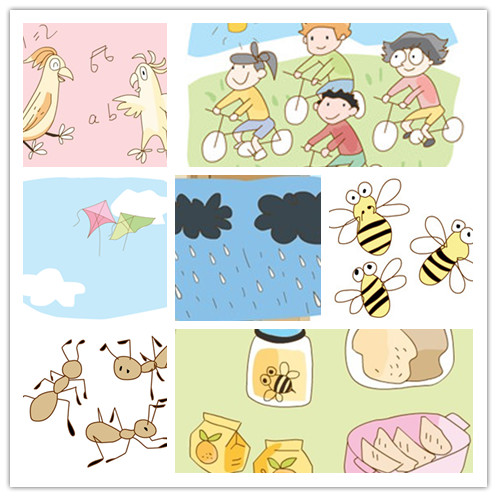 (2) S: We can see some parrots in the park.
(3) S: We can see some kites.
(T: Yes, there’re some kites in the sky.)
(4) S: We can see some bread, dumplings, honey…
(T: Good job! And we can see some drinks, right?)
(5) S: We can see some ants and bees too.
(6) S: We can see some clouds. (T: Right! There’re some black clouds in the sky.)
【设计意图:学生通过观察图片初步了解日记的内容,同时解决了部分词汇,为进一步了解日记打下基础。】
B. Look and match
 T: Look at the pictures, match the pictures and the sentences.
 a. They saw some interesting parrots in the park.
 b. They were hungry and wet.
c. The children went to the park by bike.
 d. They flew kites in the park.

 e. They saw ants and bees on their lunch.
 f. The weather became windy and cloudy.
g. It rained.
S: Look and match
(在此过程中教授动词过去式的特殊变化形式:
go→went see→saw become→became fly→flew are→were)
S: Read the sentences in the right orders.
【设计意图:通过图片和句子匹配,学生了解了日记的大概内容,这个环节动词过去式的发音是难点。让学生将句子重新排序整理,有助于加强学生理解文本的能力。】
3. Extensive reading泛读
T: Well, children. Here’re some sentences about the diary.
Open your books and read the diary by yourselves.
And then judge the sentences. (T/F)
S: Read the diary and judge the sentences.
① It rained all day on 20th September. ( F )
② The children saw a parrot show. ( T )
③ They flew kites in the park. ( T )
④ They brought lunch to the park. ( T )
⑤ They were hungry because they did not have lunch. ( T )
Teach: a parrot show; bring→brought
【设计意图:学生泛读日记,通过对日记的理解作出判断,体现了学生对文本的理解能力,同时也培养了学生正确阅读文本的习惯。】
4. Intensive reading精读(找出表达天气变化的句子,再过渡到事件变化的句子)
(1) T: What was the weather like in the morning?
S: It was sunny in the morning.
T: What did they do?
S: The children went to the park by bike.
T: What did they do in the park?
S: There was a parrot show in the park. They saw some interesting parrots.
(2) T: How was the weather like then?
S: The weather became windy and cloudy.
T: What did they do?
S: They flew kites high in the sky.
(T: It was windy, so they flew kites high in the sky, right?)
(3) T: What was the weather like in the afternoon?
S: There were black clouds in the sky. It rained.
T: How were the children?
S: They were hungry and wet.
Time | Weather | Activities |
In the morning | sunny | went to the park and saw a parrot show |
Then | windy& cloudy | flew kites high in the sky |
In the afternoon | rainy | hungry and wet |
(4) T: Why were the children hungry? Did they have lunch? (S: No.)
T: What did they bring?
S: They brought some dumplings, some bread and honey and some drinks.
But there were some ants and bees on the bread and honey.
T: So they could not eat their lunch.
Teach: can→could
【设计意图:学生再次阅读Yang Ling的日记,详细了解了他们那天的活动和状况,进一步巩固了用动词过去式来进行口语交际的能力】
5. Reading time
(1) S: Read after PPT.
(2) S: Read the story together.
(3) S: Read the story in parts.
6. T: What do you think of her day? Happy? Interesting? Terrible? Bad?
Lead into the title——What a day!
(What a day! 可以应用在很多的场景中,它的意思包括“多么糟糕的一天!”“多么忙碌的一天!”“多么美好的一天!”等。)
S: Read the title together.
【设计意图:让学生根据对整篇日记的理解来判断题目的意思,有助于他们更好地理解这句话,从而运用到以后的学习中去。】
7. Retell the diary
S: Look at the pictures and retell the story.
It was in the morning. Yang Ling and her friends went to the park by bike
 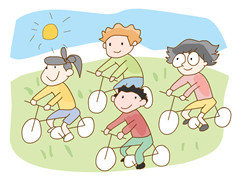 . In the park, there was a
  show. There were some interesting . Then the weather became
 and
and  . The children flew
 . They brought some food and drinks
 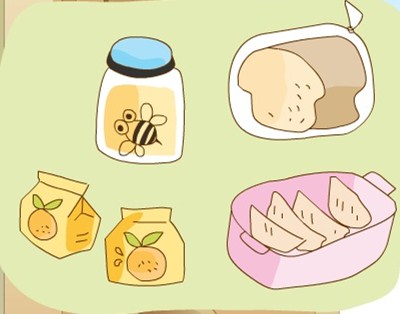 to the park. They did not eat their lunch, because they saw some
  and
and  on the bread and honey. In the afternoon, there were some
 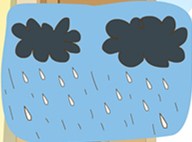 in the sky. It rained. They were hungry and wet.
Step4: Homework
1. Listen and read ’Story time’ three times.
2. Try to retell the diary according to Yang Ling’s pictures.
3. Copy the weather words and the verbs of past tense.
4. Collect more words about weather.
Board writing 板书设计
Unit 2 What a day! Sunday, 20th September
It was sunny. go→went fly→flew
cloudy. see→saw are→were
windy. become→became bring→brought
rainy. |

反思
在本节课导入部分,以歌曲导入新知,让学生通过《How is the weather?》这首歌曲动画体会本单元天气词汇的意思,课前几分钟的歌曲学习不仅能带动学生课堂开始的热情,也为后面的学习进行了铺垫。此部分所用的《How is the weather?》歌曲为网络资源,教师可以根据自己的需要调整歌曲,也可以选用四年级下册Unit5中的歌曲《A sunny day》。
接下来采用猜谜的形式教学本课中的部分词汇。通过猜测关于老师的信息,解决了dumplings(jiaozi), honey, parrot等词汇,同时很自然地引到了本课的主题——日记。在日记学习部分,让学生先通过观察图片,描述图片内容,初步体会日记,既调动了学生的好奇心,同时也为接下来文本的学习作了铺垫。整篇日记的学习分成了三个环节:略读——泛读——精读。在第一个略读环节,学生们通过匹配图片和语句,初步了解了那天发生的事情。同时引导学生学习部分动词过去式及其发音。在泛读环节学生通过阅读进行判断,逐渐提高对学生学习文本的要求。最后的精读使学生进一步的理解这篇日记,同时能运用所学句型表述当天的经过。层层递进的阅读要求,培养了学生自主学习的能力,同时引导了学生掌握正确的阅读方法。最后教师通过提问,顺利点题,让学生通过自己对整篇日记的理解去猜测题目What a day!的意思。在学习过程中,也渗透了英文日记的格式书写。
用户登录